Infrared Cameras (IR) are becoming more and more popular. A good Thermographer (a person certified to use the devices—-like James Quarello) can tell you a lot about your home or building. While they are touted as being able to “see” though materials and “see” water in walls, ceilings and floors they actually do no such thing. Click on these IR pictures for more information from James:
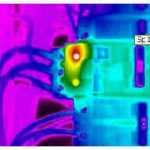
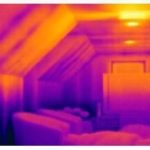

They can only do one simple thing—-and they can do this one simple thing VERY well.
They can detect temperature differences on the surface of things.
Because of this ability, the Thermographer (with proper training and experience) can give you a pretty good educated guess as to what those different temperatures mean. When areas are found that may indicate moisture, these areas are then checked/verified with different kinds of moisture meters—-or areas are opened up to verify the actual presence of moisture.
Because these cameras are so good at reading temperature differences, they are extremely useful in Energy Efficiency Analysis of homes, so that money can be spent more wisely to effectively reduce energy costs.
I by no means pretend to be an expert in the use of these cameras—-and I do not own one. Generally speaking they are considered to be a tool that is outside the scope of a Standard Home Inspection. I have called for IR evaluation of homes when I suspected issues, and could not verify what was going on “visually.” I suspect that as the cost of these cameras come down, more inspectors will have them, and they will become more common place as a tool in the Home Inspectors arsenal.
When I went to the dentist on a recent winter morning, I couldn’t help but notice how Mother Nature was doing her own IR scan of the roof of the building—-with frost.

But just like the IR Camera—-all we can tell is that there are temperature differences on the roof surfaces. Some of the possibilities are: warm air moving in the air space between the insulation and the roof sheathing, missing insulation, insulation out of place, batt or foam-board type insulation, inadequate insulation at wall top plates, recessed lighting, and/or any combination of these possibilities.
This kind of information from Mother Nature is useful however in telling us that there is something wrong with the buildings thermal performance and improvements are likely warranted.
***
Charles Buell, Seattle Home Inspector
If you enjoyed this post, and would like to get notices of new posts to my blog, please subscribe via email in the little box to the right. I promise NO spamming of your email

