Being a home inspector, one would think that it would be easy for me to advise my son and his wife as to how to find a good Home Inspector.
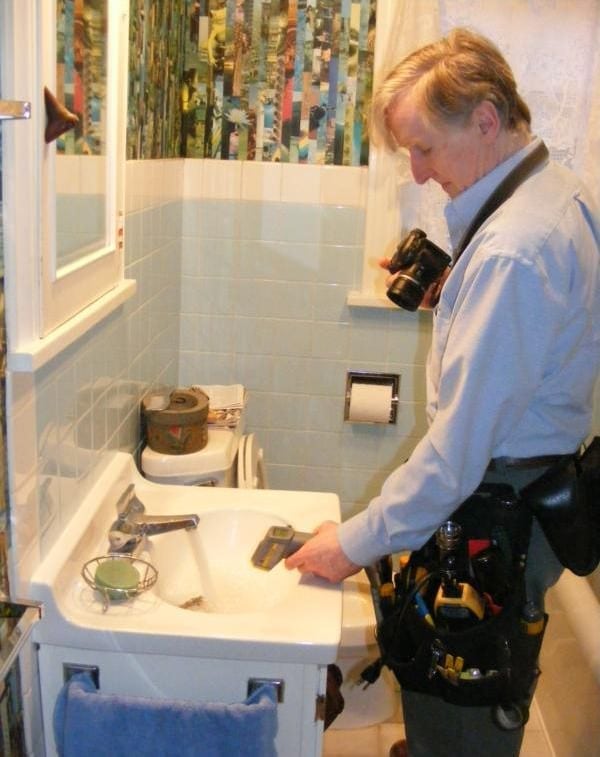 From three thousand miles away I learned that it was VERY difficult.
Of course the recommendations from their agent are a good place to start—-but what criteria do they use for picking one of the recommendations on the list from their agent? And if they go outside of that list what criteria do they use?
Another source of information might be from their friends that have had homes inspected—but how much frame of reference do they have only seeing one inspector.
Being an inspector I am able to “read between the lines” of the information inspectors might provide about themselves on-line—–buyers are not likely going to be able to do that.
And then there are all the “INITIALS!”
How the heck are buyers supposed to wade through all the hype, marketing, and (in some cases) just plain malarkey of the Home Inspector Associations. There are ASHI, InterNACHI, NAHI, AHI, AII, NIBI—–and that doesn’t even get into all the individual State Associations, and all the initials of the inspector’s add-on services.
Disclaimer: The following comments about the process of finding an inspector for my son and his wife was a less than perfect undertaking and the conclusions/opinions I am going to make in no way reflect the way I think the process should work, and perhaps should serve as a warning ahead of time to anyone who’s panties gets all in a bunch 🙂
1. Use Google: If a person can’t find an inspector in the area they are looking in, through a Google search, one has to question how up to date the inspectors in that area might be in other areas of their business. I know this is a harsh reality—-but it is the way modern consumers find information—the internet.
2. Use Home Inspector Association’s “FIND AN INSPECTOR” functions: BUT USE THEM ALL. Be very careful about “believing” what any one Association tells you about why they are the best. The reality is that there are great inspectors in all of the Associations—and lousy inspectors in all of the Associations.
3. Does the inspector have a website? To reiterate #1, Inspectors not only have to have a website, it must be: easy to navigate and have the information one is looking for—-EFFORTLESSLY. Is the website just trying to look spiffy or is it creating the opportunity for the buyer to contact them?
a. Phone number (206 478-7371) should be prominently displayed. Avoid forms designed for consumers to fill out to have information sent to them—–you risk that the buyer will leave your site and will find an inspector that doesn’t make them work so hard for the information.
b. Sample report must be there. When I was doing my search recently for inspectors on one of the Association lists, there were 24 inspectors listed for the area I was interested in. Five of those inspectors had no websites at all—-these inspectors may be the best inspectors in the world but if I can’t check them out previous to calling them—-they just plain are not going to get the call. Only three inspectors had sample reports and two of those sample reports were so “bad” that it really only left one that I would even consider calling. 1 out of 24 is not very good odds. I really think that reports on websites are perhaps the best way for consumers to get a sense of what the inspector is going to be doing for them—and what they will have when all is said and done.
Is the report just a check list with tons of information that doesn’t pertain to that particular home? Are there photographs and diagrams to help explain what is going on? Does the report educate as well as inform? Is the report 5 pages or 50 pages? Are there 5 pages of report and 10 pages of disclaimers?
Also, NEVER make someone fill out a form to see a Sample Report. Again many will just hit the back button and move on to the next inspector on the list.
c. The Website should not take forever to load because it has a bunch of video or moving parts. All sites take some amount of time to load and we are all used to that—but just don’t annoy the searcher right off the bat by having it take longer than “normal.”
d. How good the website looks should not be more important than the information it is supposed to be conveying. Can they find the information they are looking for or do they have to wade through a bunch of stuff telling them how good you are first. Everyone knows that nobody is going to fill there site up with stuff about how bad they are.
e. NEVER—-be “Under Construction.” What this actually says is, “I have not got my shit together yet—please forgive me because I am a Newbie.” Do you really want to convey that you are not ready yet? It is better to not have anything come up at all. Newer types of websites don’t typically have this problem as everything is done off stage and then changes are uploaded all at once. Once must constantly monitor that links are functional and pages actually are loading for people out there in the real world. We have all witnessed the dreaded “404” error message and if they happen on your site, get them fixed promptly.
4. Avoid multi-inspector franchises unless you REALLY know what you are doing. I know I will get some flak for this one—-but please re-read the disclaimer above. We are talking about consumers that know nothing about buying a house and are trying to find an inspector based on the information available on-line. While “theoretically” the consumer should be getting the same great service that they would if the boss of the operation was doing the inspection, it is my experience that this is rarely the case. It is a good idea to look for an inspector that is in no hurry to get to the next inspection. Most franchises operate successfully due to volume. Is it possible to get a good inspection from a franchise inspection firm? Of course—-I am just trying to “streamline” the process a bit for the average buyer—-it is difficult enough as it is.
5. Find a GREAT agent! Again—let the arrows fly—-this is reality TV here, and that reality says that most buyers are going to listen to the recommendations of their agent as to an inspector to use.
I would go so far as to say it is less risky than doing ones own individual search for an inspector.
So from this point of view, the key to finding a good inspector would first involve doing ones homework well enough to find an agent that one totally trusts. The BEST agents have one thing in mind—-seeing to it that their buyers are taken care of in the best possible way. Finding such an agent is 50% of the battle of finding a good inspector. You then merely have to find one on that list that is the best fit for you. While some argue that this is an inherent conflict of interest, I would argue that, given the current dilemma the consumer has in finding a good inspector by other means, that it is still a viable option. I find it ludicrous to think that I would ever compromise the inspection process for a few hundred bucks and the “anticipation” of future referrals. I hear that this happens but I would expect it to be pretty rare—-and perhaps more of a sign that one did not do a very good job of choosing ones agent.
6. Does the person that is going to be doing the inspection answer the phone? Does your call go to voice mail? Is the call taken by an answering service? The key here is that there should be very little disconnect between the information and the person you talk to and the person that shows up to do the inspection. As an inspector I do not answer the phone while I am working for someone else—leave a message and I will call back as soon as possible. It is not a perfect system but I would rather talk to the buyer directly than have the buyer talk to someone that may not be qualified to answer all their questions.
***
Charles Buell, Real Estate Inspections in Seattle
If you enjoyed this post, and would like to get notices of new posts to my blog, please subscribe via email in the little box to the right. I promise NO spamming of your email


 I find myself struggling with the math on this, but I end up with more questions than answers.
